
Petit panier de roman #15
Coucou, c’est Bidib. Enfin de retour !! Eh oui, 2026, c’est l’année zéro pression. Pas de rendez-vous ni de planning, je viendrais au fil de l’eau quand le courant me mène par ici.
Aujourd’hui, je viens pour partager quelques-unes de mes dernières lectures.
Où s’adosse le ciel de David Diop
J’ai découvert ce livre grâce à NetGalley, je ne connaissais pas cet auteur et le résumé m’a intrigué :
À la fin du XIXe siècle, Bilal Seck achève un pèlerinage à La Mecque et s’apprête à rentrer à Saint-Louis du Sénégal. Une épidémie de choléra décime alors la région, mais Bilal en réchappe, sous le regard incrédule d’un médecin français qui cherche à percer les secrets de son immunité. En pure perte. Déjà, Bilal est ailleurs, porté par une autre histoire, celle qu’il ne cesse de psalmodier, un mythe immense, demeuré intact en lui, transmis par la grande chaîne de la parole qui le relie à ses ancêtres. Une odyssée qui fut celle du peuple égyptien, alors sous le joug des Ptolémées, conduite par Ounifer, grand prêtre d’Osiris qui caressait le rêve de rendre leur liberté aux siens, les menant vers l’ouest à travers les déserts, jusqu’à une terre promise, un bel horizon, là où s’adosse le ciel…
Ce chemin, Bilal l’emprunte à son tour, vers son pays natal, en passant par Djenné, la cité rouge, où vint buter un temps le voyage d’Ounifer et de son peuple.
De l’Égypte ancienne au Sénégal, David Diop signe un roman magistral sur un homme parti à la reconquête de ses origines et des sources immémoriales de sa parole.
(source : Livraddict)
J’ai donc découvert cette œuvre dans sa version audio lue par Olivier Dote-Devi et j’ai adoré ! Avec cette lecture, je suis sortie de ma zone de confort, un texte beaucoup plus « littéraire » que ceux que je lis d’habitude. Dès les premières lignes, j’ai été emporté par le style de l’auteur. J’ai beaucoup aimé sa plume, que je trouve très poétique tout en restant quand même narrative. Je n’aime pas les grandes envolées lyriques qui nous sortent du récit. Quand je lis un livre, c’est avant tout pour son histoire. Et, ici, on a les deux : une histoire prenante et une belle plume.
L’histoire en double temporalité m’a envouté. J’ai adoré suivre en parallèle Bilal qui tente de rentrer chez lui après une terrible épidémie de choléra et qui en chemin, va vivre son lot d’aventures inattendues et l’histoire de ces ancêtres qu’il se raconte à lui-même, car il est celui qui doit garder la mémoire et la transmettre à son tour. Il s’accroche à ce mythe familial comme si sa vie en dépendait. Il raconte pour ne pas oublier, mais surtout pour avoir un but et ne pas flancher, car la mort est tout autour de lui. On suit deux voyages sur les mêmes routes, mais séparés de 2000 ans. Les deux histoires m’ont captivé et j’ai aimé la façon dont elles s’entrelacent.
Le seul bémol qui fait que ce ne sera pas un coup de cœur, mais une très belle lecture : la fin. Je l’ai trouvé un peu facile, pas à la hauteur de tout le récit.
Une très belle découverte qui me donne envie d’explorer la bibliographie de David Diop. Connaissez-vous ? Si ce n’est pas le cas, je ne serais que vous conseiller cette lecture. Un très beau roman, rapide à lire.
Le Luth d’ébène de Panagiotis Agapitos
J’ai découvert ce livre par hasard en flânant en librairie, et moi, les romans policiers historiques, j’adore. Celui-ci se passe à l’époque byzantine, je n’avais encore jamais lu de roman se déroulant dans cette époque historique. Il n’en fallait pas plus pour que je reparte avec. J’ai déjà parlé de ce roman dans mes carnets de bord. Je vous livre ici mon impression générale.

Résumé : Empire byzantin, mai 832. Envoyé en ambassade auprès du calife de Bagdad par l’empereur Théophile pour négocier la paix, Léon le protospathaire (« premier porte-glaive ») arrive à la ville frontalière de Césarée, en Cappadoce, dernière étape avant d’entrer en territoire musulman. Paisible en surface, la cité est un chaudron ébullition. Des silhouettes furtives se glissent le long des ruelles obscures du quartier arabe ; les rumeurs d’une guerre proche commencent à circuler ; des jeunes filles disparaissent mystérieusement et des moines patibulaires font soudain leur apparition… Lorsque l’on découvre le corps atrocement mutilé de la fille du juge de la ville, le gouverneur, débordé, demande l’aide l’ambassadeur. Léon va devoir entrer dans la danse des masques, enquêter dans les casernes, les tavernes et les bordels de Césarée ; pour la première fois, il va être amené à résoudre des crimes.
(source : livraddict)
J’ai aimé le contexte historique du roman, on y découvre l’organisation militaire et politique de l’époque, les liens entre pouvoir et religion, mais le roman manquait un peu de rythme. L’enquête, mais longtemps à se mettre en place et avance très lentement et on nous donne peu voir pas d’indices pour découvrir le coupable. Moi, j’aime les romans policiers où on peut participer à l’enquête et faire nos propres déductions. Ici j’étais frustré j’ai trouvé la conclusion un peu « lapin sorti du chapeau » ou alors j’ai loupé un truc. Ce qui est possible parce que j’ai fait une pause de plusieurs mois dans cette lecture. En effet le rythme et la plume de l’auteur ne me tenaient pas en haleine. Néanmoins j’ai aimé l’ambiance générale et le personnage principal qu’au début je trouvais assez antipathiques et que j’ai appris à apprécier au fil des pages.
Ce que j’ai également aimé, c’est que, si une grande partie du récit est raconté du point de vue du personnage principal, Léon le protospathaire, il y a de nombreux autres personnages qui enrichissent le récit avec d’autres points de vue.
Une bonne lecture que je ne conseillerais cependant qu’aux fous d’Histoire (celle avec un grand H), car, si le côté historique ne vous intéresse pas, vous risquez de vous ennuyer.
Il existe un deuxième tome des enquêtes de Léon le protospathaire, à l’occasion j’aimerais le lire, mais ce ne sera pas une priorité.

Cottage, fantômes et guet-apens d’An Granger
Je connais Ann Grnager pour sa série de cosy Mysterie Lizzie Martin qui se déroule au XIX siècle. Je n’ai pas fini la série, mais les trois tomes que j’ai lus m’ont plu. Alors, quand je suis tombé sur le premier tome de cette nouvelle saga à un prix de lancement, je me suis dit que ça serait l’occasion idéale de la découvrir. Contrairement à Lizzie Martin, nous ne sommes pas du tout dans un policier historique ici.
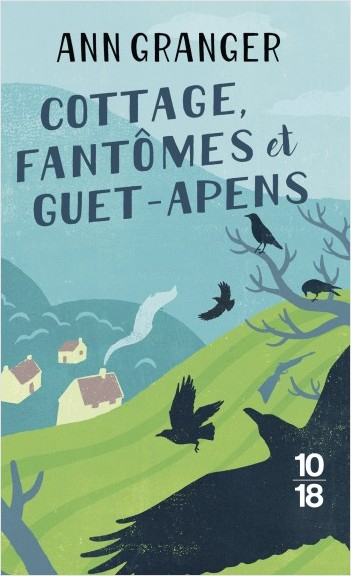
Résumé : Lucas Burton déteste la campagne ; de la boue, du fumier, des charognes, et c’est tout. Il a bien raison. En se rendant pour affaires dans une ferme abandonnée au milieu de nulle part, il tombe sur le cadavre d’une jeune fille. Ses ennuis ne font que commencer : Penny Gower, qui travaille au centre équestre du coin, a vu sa Mercedes grise quitter les lieux du crime. Les choses commencent à sentir le roussi pour Lucas…
L’inspectrice Jess Campbell est chargée de l’enquête, mais entre l’absence de piste solide et son nouveau commissaire, Ian Carter qui la surveille en permanence, elle est sous pression. C’est alors qu’on découvre un nouveau cadavre…
(source : livraddict)
Avec le recul j’avoue être assez déçue par cette lecture. Certes, la plume de l’autrice est agréable et on passe un bon moment, mais encore une fois, on a le coupable qui est révélé à la fin en mode « lapin qui sort du chapeau » et l’enquête est assez lente, alors même que le roman est assez court et qu’il n’y a pas de contexte particulièrement complexe à présenter. Les personnages ne m’ont pas trop touché. Il ne me reste pas grand-chose de cette lecture deux mois plus tard.
Je ne pense pas continuer cette série, je préfère les enquêtes de Lizzie qui ont la même lenteur, mais ont le mérite de me faire voyage à une autre époque.
Voici les trois derniers romans que j’ai lus. Mon dernier petit panier de romans datant de mai, j’ai depuis également lu la fille derrière l’écran, une romance que j’ai trouvée sans intérêt et Ars obscuara tome 2 et 3. J’aime beaucoup cette saga, j’en ai largement parlé dans mes vlog et mes carnets de bord. Il me reste un dernier tome à découvrir pour finir la saga.
À bientôt pour de nouvelles aventures livresques

Si je reprends la lecture des romans d’Ann Granger, ce sera avec la série Lizzie Martin, ça fait longtemps que je n’en ai pas lu !
j’en ai quelques un dans ma PAL, on pourrait s’organiser une petite lecture commune un de ses jours 🙂
Tout comme toi, j’avais une préférence pour Lizzie Martin, même si je trouve que les tomes suivants de la série Jessica Campbell s’améliorent.
Le côté Londres fin XIX rajoute un quelques chose que cette série n’a pas, mais si tu me dit que la suite s’améliore j’y jetterais peut être un oeil si je suis en manque de cosy mysteries 🙂
Comme toi, Anne Granger me va bien dans une série particulière… 🙂
Merci pour ces retours, chère Irène, des bises livresques.