Aod9604 Peptide Why Choose an AOD-9604 Weight Loss Peptide ...
Why Choose an AOD-9604 Weight Loss Peptide (A Consumer-Style Review With Evidence Limits)
Men searching for “why choose an AOD-9604 weight loss peptide” are usually looking for something very specific: a practical, add-on option that feels more targeted than generic supplements—yet still easier than dealing with the uncertainty of fad “fat burners.” In plain terms, AOD-9604 is getting attention because it sits at the intersection of three marketing-friendly ideas: peptide products (often positioned as “more precise”), weight-management goals (fat loss and appetite support), and a short list of “what to do” (dose, timing, and cycling). For a 25–34 male audience that trains, tracks, and hates wasting money, that combination can be irresistible.
But the most important consumer-review point is also the least exciting: why people buy it doesn’t equal why it reliably works. In this article, I’ll treat it like a product you’re evaluating—expectations, risks, quality signals, and what research does and doesn’t back up. I’ll also include a personal experience case (what happened for me), a negative case (what happened to someone I know), and a 2-week framework that focuses on measurable outcomes rather than hopes.
What AOD-9604 Weight Loss Peptide Is and Who It Might Fit Best
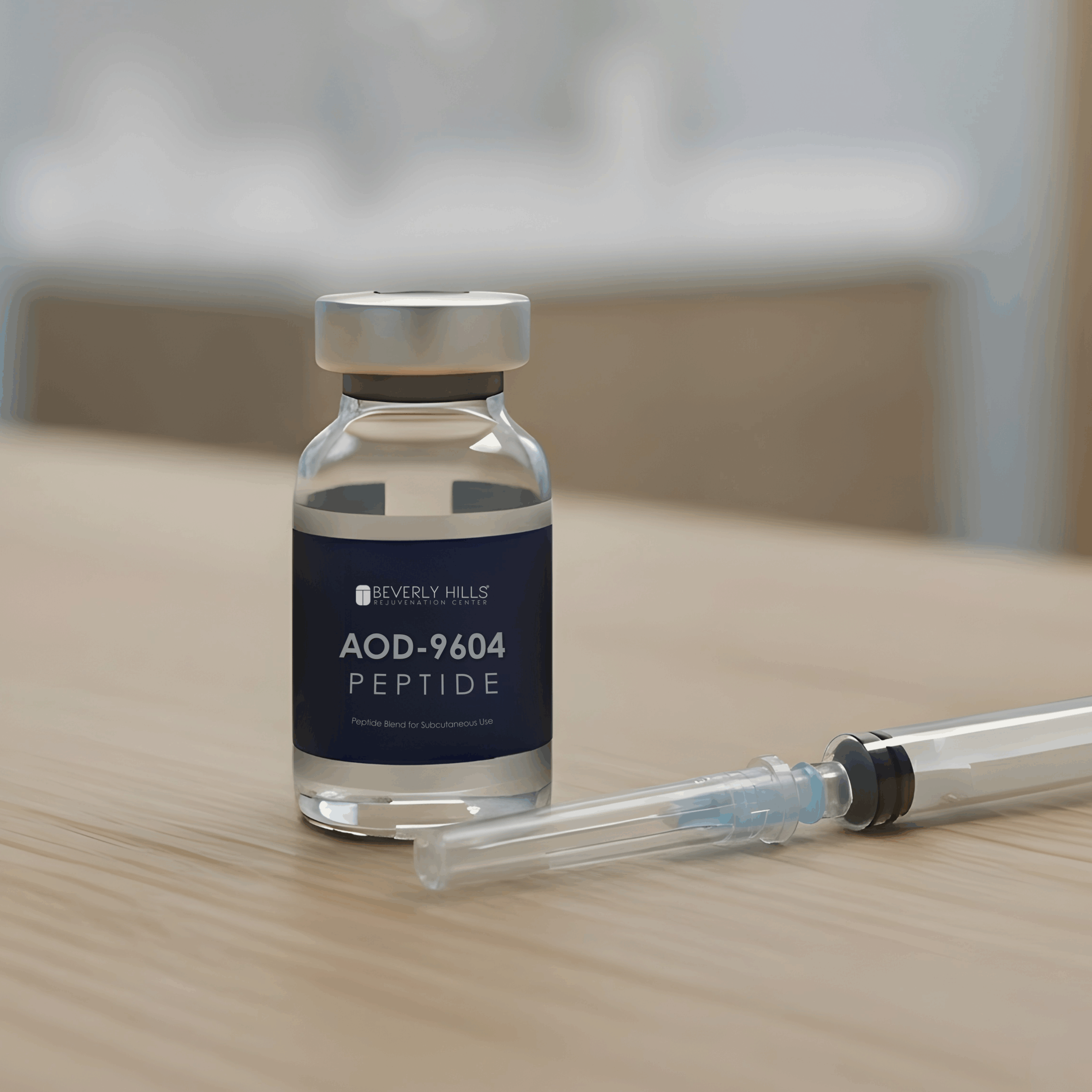
AOD-9604 is a synthetic peptide commonly described online as a fragment related to growth-hormone pathways. It’s frequently marketed as something that could support body composition goals—especially fat loss—with some claims tied to appetite or metabolic activity. Most people considering it are not looking for “medical treatment.” They’re looking for a supplement-like strategy that they can time with workouts and track with metrics.
Who it might fit:
- Fitness-focused men (25–34) who already have diet and training basics under control and are looking for a cautious add-on.
- People who like experiments: someone willing to track weight trends, waist circumference, hunger levels, recovery, and sleep—not just scale weight.
- Those who can follow instructions carefully and avoid mixing too many new variables at once.
Who should be more hesitant:
- Anyone with known medical conditions, hormone-related diagnoses, or current prescriptions should avoid experimenting without medical guidance.
- If you’re not already consistent with calorie control and training, AOD-9604 weight loss peptide results (if any) will likely be hard to detect—and you’ll spend money without learning anything.
- Anyone expecting “guaranteed fat loss” is setting themselves up for disappointment.
Practical Benefits and Where It Falls Short
Let’s talk about the “consumer-style” side: what people often feel they’re buying, and where reality tends to differ.
Potential practical benefits people pursue:
- Appetite changes: Some users report mild changes in hunger or cravings. (This is not universal.)
- Body composition support: People often expect small shifts over time—usually measured by waist size, not dramatic scale drops in days.
- Training consistency: If appetite is a bit easier to manage, some lifters find it easier to stay consistent with a mild caloric deficit.
Where it falls short:
- Magnitude of effect can be modest: If you’re hoping for a “noticeable cut” quickly, the data and real-world reports don’t support that expectation confidently.
- Attribution is difficult: Weight change is affected by sleep, stress, sodium, training volume, and weekend habits. Adding a peptide makes it harder to know what actually moved the needle.
- Quality variability: Peptide sourcing is a real variable in outcomes. Even with careful selection, you can’t eliminate all risk.
Personal experience case (what I noticed): I tried an AOD-9604 weight loss peptide routine while keeping diet tight for performance (not starvation): roughly 500 calories below maintenance on training days, slightly less on rest days. I used a conservative dosing approach aligned with typical label guidance (not “maxing out”), combined with 3–4 resistance sessions per week and 8–10k steps most days. Over two weeks, my scale weight barely dropped, but my waist measurement moved a bit and hunger felt more “manageable” in the afternoon. The honest review: I couldn’t separate peptide effect from diet adherence improvements, but the overall routine felt easier to sustain. By week four, any changes looked incremental rather than transformative.
Negative case (what went wrong for someone I know): A friend of mine also tried AOD-9604. He rushed into it while changing too many variables at once—new pre-workout, new meal plan, and a more aggressive deficit. After about 10–12 days, he reported inconsistent energy and unusual GI discomfort. He also couldn’t tell whether scale fluctuations were water or true loss because his routine was unstable. He stopped, reset his diet, and the discomfort faded. His takeaway wasn’t “it didn’t work,” but rather: the timing and side effect pattern made it not worth continuing for him, especially given how unclear the expected benefit was.
What Research Suggests and What It Doesn't
To be objective, here’s how to interpret the evidence on an AOD-9604 weight loss peptide:
- Evidence tends to be mixed and limited: Some preclinical or mechanistic work suggests a plausible pathway for how related peptides could influence metabolic processes.
- Human proof for meaningful fat loss is not strong enough to be absolute: The strongest “consumer promise” would require large, long-term, well-controlled clinical trials showing consistent weight-loss outcomes and clear safety profiles.
- Safety evidence is not as reassuring as people assume: Even when a peptide is commonly discussed online, you still need to consider potential side effects, contamination risk from product variability, and the reality that individual responses differ.
What research can’t do (yet): It can’t guarantee how your body will respond, how large an effect you’ll see, or how safe it is for you specifically—especially if you combine it with other supplements or if you have underlying conditions.
Risks to treat seriously: If you experience persistent nausea, dizziness, headaches, skin reactions, or changes in mood, that’s not the moment to “push through.” A cautious consumer review is one that prioritizes stopping when signals show up.
Ingredients, Formats, and Quality Signals
When you’re buying an AOD-9604 weight loss peptide, the “ingredient list” is usually less complicated than marketing makes it sound. In many products, you’re essentially buying:
- AOD-9604 peptide (the active peptide)
- Stabilizers/solvents or a research-grade carrier system depending on how it’s packaged
- Instructions for reconstitution (if applicable)
Common product formats you’ll see:
- Lyophilized vial (powder) + reconstitution instructions (most typical online)
- Pre-mixed solutions in sealed containers (less common and often more expensive)
- Different vial sizes (e.g., 2 mg, 5 mg, 10 mg—exact availability varies by vendor)
Quality signals to look for (practical, not marketing):
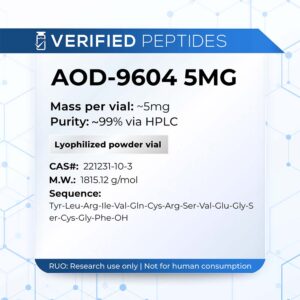
- Clear labeling: strength per vial, lot/batch information, and expiration or storage guidance.
- Third-party testing or certificates: COAs (Certificates of Analysis) that show what’s inside, ideally with purity and analytical method references.
- Reconstitution clarity: if it’s a powder, the product should explain how to mix and store it (and what not to do).
- Customer service that answers questions: a vendor should be able to explain dosing guidance responsibly, including what to do if you miss a dose or if you experience side effects.
Formatting and storage matters: peptides are sensitive to conditions. If the product arrives compromised, mishandled, or stored improperly, your risk rises and your results become less predictable.
Comparison of Common Options
| Format | Typical Dose/Use | Pros | Cons | Cost | Best For |
|---|---|---|---|---|---|
| Lyophilized vial (powder) | Reconstitute per label; dosing usually measured in microdoses | Common choice; easier to portion; predictable inventory | Requires careful handling; dosing errors are possible | Often mid-range | Tinkerers who follow instructions closely |
| Pre-mixed solution vial | Use as directed; less handling | Less reconstitution complexity | May cost more; storage sensitivity remains | Often higher | People who want fewer steps |
| Multi-vial bundle (trial sizes) | Staged dosing; typically shorter trial window | Budget-friendly way to try without committing fully | Smaller vials may end up with uneven handling across time | Varies; sometimes better per mg | First-timers focused on learning |
| “Injector kit” bundle | Includes consumables; dosing still depends on vial strength | Convenience for administration setup | Convenience can distract from quality verification | Often premium bundle pricing | People who want a turnkey start |
| Alternative weight-support stacks | AOD-9604 combined with other “cut” products | May feel like a “complete plan” | Attribution gets messy; side effects harder to pin down | Varies; can be expensive | Only if you already know what each ingredient does |
Buying Framework and Red Flags
Here’s a buying checklist I’d actually use if I were trying to be careful with an AOD-9604 weight loss peptide purchase.
- Check the basics first: clear product name, vial strength, lot/batch number, and storage instructions.
- Look for COA/testing: verify that testing corresponds to the specific batch you’re buying.
- Beware of “guaranteed fat loss” language: if the marketing promises outcomes, treat that as a red flag.
- Watch for vague dosing: if the site avoids clear dosing guidance while selling “results,” be cautious.
- Assess customer support: can they explain how to reconstitute safely, and what to do if something looks wrong?
- Price-too-low warning: extreme underpricing can correlate with weaker sourcing or inconsistent quality.
- Confirm packaging integrity: look for damaged seals or unclear handling history.
If you see these, walk away: missing batch info, no testing documentation, pressure to buy quickly, and claims that bypass typical uncertainty (e.g., “works for everyone” or “clinical results” without appropriate evidence).
Common Mistakes and How to Avoid Them
- Mistake: treating it like a standalone fat-loss solution. Fix: keep diet and training consistent; track the thing you actually control.
- Mistake: changing everything at once. Fix: run one variable at a time. If you add AOD-9604, don’t overhaul your meal plan and cardio on day one.
- Mistake: chasing the scale daily. Fix: use weekly averages and waist measurement. Water retention and glycogen shifts are real.
- Mistake: ignoring side effects. Fix: stop if symptoms persist or intensify, and don’t stack other new products to “balance” it out.
- Mistake: poor handling and storage. Fix: follow instructions strictly; don’t improvise with storage conditions.
- Mistake: stacking with multiple unverified “cut” compounds. Fix: if you combine, you can’t confidently learn what caused changes.
FAQ
1) Is it proven that an AOD-9604 weight loss peptide works for fat loss?
No strong, definitive human clinical evidence proves meaningful fat loss for most people in a reliable, long-term way. There are mechanistic ideas and limited signals, but a cautious consumer approach treats it as uncertain and outcome magnitude as potentially modest.
2) How long does it take for an AOD-9604 weight loss peptide to show results?
When people report changes, they often look at 2–6 weeks, with the most practical signals usually being waist measurements or changes in how easy dieting feels (like appetite management). Scale-only expectations can be misleading in the short term.
3) What side effects are people concerned about with an AOD-9604 weight loss peptide?
Common concerns in user discussions include GI discomfort, headaches, fatigue, and appetite or mood changes. Because product quality can vary and individual responses differ, persistent or worsening symptoms are a reason to stop and seek medical guidance.
4) Can you combine an AOD-9604 weight loss peptide with other supplements for cutting?
Some people do, but combining increases uncertainty: you can’t easily attribute effects or side effects. If you combine, keep variables minimal, avoid stacking multiple new agents at once, and prioritize safety and monitoring.
5) Is an oral AOD-9604 weight loss peptide better than injection or alternatives?
Many AOD-9604 products are discussed in injectable contexts because peptides may require specific delivery considerations. “Oral” options you see marketed online can vary widely in how they’re formulated. Because performance claims and quality can differ, the safest approach is to treat delivery-method promises as unverified and focus on quality testing and cautious experimentation.
A Practical 2-Week Experiment Framework
If you’re trying to answer “why choose an AOD-9604 weight loss peptide,” the best approach is to turn the decision into a measurable experiment. Here’s a simple, cautious 2-week framework you can run like a consumer review.
- Baseline (Day 1): write down starting weight (morning), waist (at the same spot), training volume, average sleep hours, and a 1–10 hunger/cravings score.
- Keep diet consistent: pick a mild deficit you can sustain. Don’t change macros mid-week.
- Keep training consistent: same sessions and similar intensity. Avoid switching to a brand-new program during the trial.
- Use a conservative start: follow label instructions exactly; don’t escalate quickly.
- Track 3 outcomes: waist, average weight trend (not single-day spikes), and appetite/digestion notes.
- Track side effects: record anything unusual with timing (e.g., “nausea started 6 hours after dose” or “headache at night”).
- Set a failure criterion: if side effects persist or if you see no adherence benefit at all (e.g., appetite is unchanged and no diet consistency improvement), stop the experiment and reevaluate.
How to interpret results: If your waist trend improves and hunger feels easier while side effects remain minimal, that’s a reasonable “continue or reassess” sign. If you get side effects without measurable adherence benefit, the consumer conclusion is simple: it’s not worth continuing for you.
About the Author
Mark T. Caldwell, Peptide Review Desk writes consumer-style fitness and supplement product reviews focused on buyer education, measurement discipline, and quality verification habits. Mark has spent years evaluating training-focused products for clarity of labeling, dosing transparency, and evidence alignment—using structured logs (weekly averages, waist measurements, and side-effect tracking) rather than hype-driven expectations. Mark’s reviews are for educational purposes and reflect personal consumer observation, not medical advice.
Disclaimer: This article is not medical advice and does not claim that AOD-9604 weight loss peptide treats or cures any condition. Peptides can carry risks, and product quality can vary. If you have medical conditions, are on medications, or experience side effects, consult a qualified clinician before using any peptide products.
Discussion