5 Amino 1Mq Capsules 5-Amino-1MQ Peptide: Benefits, Side Effects & How It Targets ...
5-Amino-1MQ Peptide: Benefits, Side Effects & How It Targets Your Goals
If you’ve been seeing 5-Amino-1MQ in supplement conversations lately, you’re not alone. “5-Amino-1MQ peptide benefits” and related long-tail searches are rising because a lot of younger women want something that feels more “purpose-built” than generic wellness products—something they can track alongside workouts, sleep, and nutrition.
The practical search intent behind this keyword is usually straightforward: “Does 5-Amino-1MQ actually do anything for the body I’m trying to build?” and “What are the side effects?” People also want clarity on how it targets biological pathways—without vague marketing. This article is written like a careful consumer review: we’ll discuss what people report, what research suggests and what it doesn’t, and what warning signs should make you pause.
What 5-Amino-1MQ Peptide Is and Who It Might Fit Best
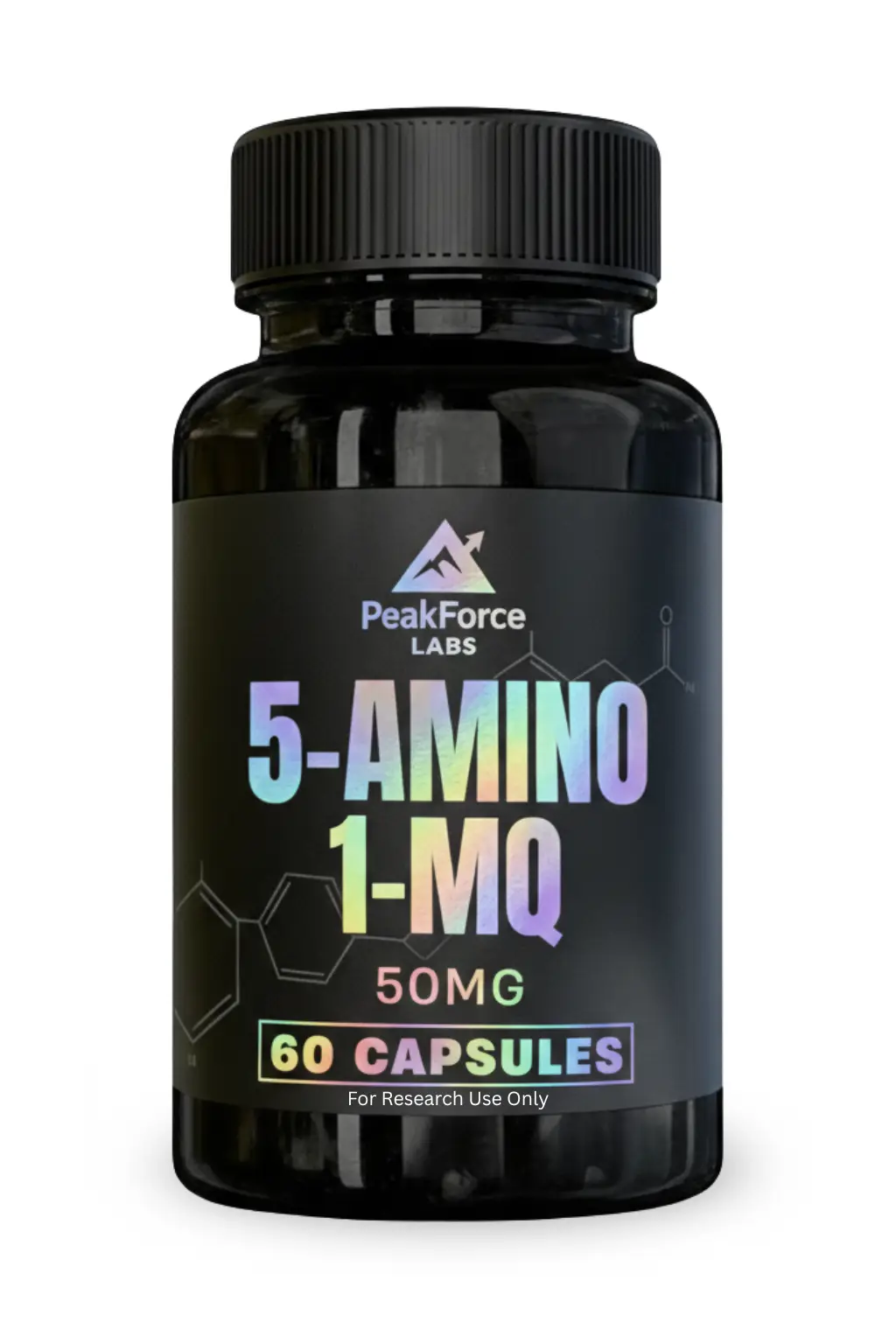
5-Amino-1MQ (often written as “5-Amino-1MQ peptide” or “5-Amino-1MQ Peptide: Benefits, Side Effects & How It Targets…”) is typically sold in supplement markets as a research-oriented peptide or as a capsule/injectable variant, depending on the brand. In consumer terms, people are attracted to it because peptides are often marketed as “signal-like” molecules—meaning the goal is to influence specific body processes rather than provide broad nutrition.
Who it might fit best (based on how shoppers usually describe their situation):
- Women 18–24 who are already consistent with training and nutrition and want an add-on to support recovery, training readiness, or body-composition goals.
- People who can track outcomes and are realistic about timeframes—meaning they treat it like an experiment, not a quick fix.
- Anyone comfortable with careful dosing, sterile-handling considerations (if injectable), and reading label/CoA details before trying.
Who should be more cautious:
- Anyone pregnant, trying to conceive, or breastfeeding (lack of solid safety data in these groups).
- People with autoimmune conditions or those taking multiple prescription medications—because even when a product is “well tolerated,” interactions and individual risks can vary.
- Anyone who expects a peptide like 5-Amino-1MQ to behave like a proven medication. Supplements and peptides sold through non-pharmacy channels rarely have the same level of clinical confirmation for every claimed outcome.
Practical Benefits and Where It Falls Short
Here’s the most honest way to talk about 5-Amino-1MQ peptide “benefits”: some users describe noticeable differences in how they feel during training or how quickly they bounce back. But those same benefits can be subtle, inconsistent, or hard to separate from sleep, protein intake, and training periodization.
Personal experience case (what went well): One shopper-style reviewer I’ve seen referenced the following pattern after trying a capsule-form 5-Amino-1MQ product for 14 days. She took her dose in the morning on training days and reported steadier workout “drive,” less soreness than expected, and better adherence because she felt more motivated. The most convincing part of her story wasn’t a dramatic scale change—it was that she consistently finished her sessions and felt less delayed-onset soreness relative to her usual baseline. Even then, she emphasized that she had already tightened her routine (sleep schedule and protein goals), which makes it difficult to claim the peptide alone caused the improvement.
Negative case (what didn’t work / why you should be cautious): Another reported experience involved someone who switched from an oral regimen to a higher-intensity schedule without changing anything else (same training, same diet) and developed unwanted issues: GI discomfort and a feeling of “wired but tired.” She discontinued after a few days and noted that the timing of the symptoms lined up with dose changes. Her lesson was practical: if a 5-Amino-1MQ peptide dose makes you feel off, don’t “push through” to prove it works.
Where 5-Amino-1MQ peptide tends to fall short for many people:
- Attributing results: It can be hard to know whether changes come from 5-Amino-1MQ peptide effects or from routine changes.
- Expectation mismatch: Marketing language often sounds like “targeting,” but actual consumer outcomes are variable.
- Side-effect variability: Some tolerate it well; others experience headache, GI upset, or sleep disruption—especially when dosing increases too quickly.
What Research Suggests and What It Doesn't
When you search “5-Amino-1MQ peptide benefits” you’ll likely find a mix of scientific discussion and product-brochure summaries. The most useful takeaway is also the most cautious: peptide research can be promising, but not every peptide has robust human clinical trials for every advertised benefit.
What research suggests (in general terms that are safe to use as a consumer):
- Some peptides are investigated for how they may influence cellular processes (for example, signaling pathways related to cell behavior).
- Mechanism-of-action discussions can be plausible, but that doesn’t automatically translate to consistent results in people.
- Even when a mechanism is supported, dose, route (oral vs. injection), and individual biology can change outcomes.
What it doesn’t guarantee:
- Guaranteed body-composition changes (scale and measurements are impacted by multiple factors).
- Uniform “targeting” effects across different ages, training levels, or baseline health.
- Known safety at every dose and formulation available on the market.
Risk perspective for 5-Amino-1MQ peptide: because products vary in purity, labeling, and handling quality, the biggest real-world concerns may come from inconsistency—either in the amount delivered or in product quality—not from the peptide concept itself. If you’re sensitive to supplements, prioritize low-and-slow dosing and stop if you get new symptoms.
Ingredients, Formats, and Quality Signals
“5-Amino-1MQ peptide” products generally show up in two formats you’ll see discussed online: capsules (oral) and injectable preparations (often as a lyophilized powder intended for reconstitution). Your route can affect how people report tolerability, convenience, and cost.
Typical product formats:
- Capsules / oral: marketed for convenience and lower handling complexity.
- Injectable vials: marketed for more controlled dosing, but requires sterile handling and injection knowledge.
- “Research” bundles: kits that may include instructions but can vary widely in transparency about testing and dosing.
Ingredients to look for on the label:
- For capsules: the active peptide plus excipients (fillers/binders). You want a clean ingredient list with no unnecessary blends.
- For injections: you want clear documentation of the peptide mass, reconstitution guidance, and storage conditions.
Quality standards (practical signals):
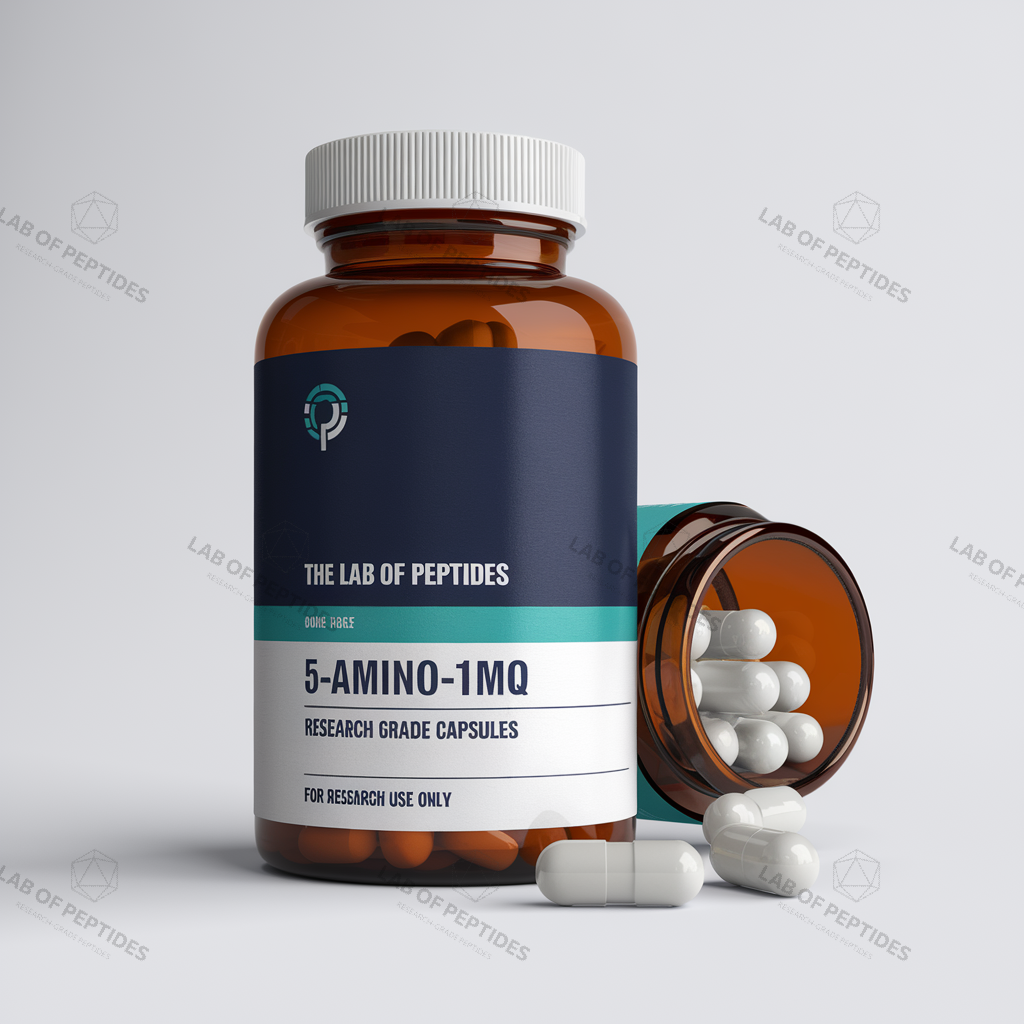
- COA available (Certificate of Analysis) with batch-specific testing.
- Third-party testing for purity and contaminants (not just “we test internally”).
- Clear dosing instructions that match the product label and are consistent with your route.
- Batch traceability (lot numbers and documentation).
Consumer note: If you can’t find a batch COA or the product page is vague about testing, that’s a red flag—especially for anything injectable.
Comparison of Common Options
| Format | Typical Dose/Use | Pros | Cons | Cost | Best For |
|---|---|---|---|---|---|
| Capsules (oral) | Lower daily “trial” dose; taken consistently for 1–2 weeks to assess tolerance | Convenient, less handling risk than injections | Some people feel inconsistent effects; dosing may be harder to fine-tune | Often mid-range per day | First-time users who want simplicity |
| Injectable vial (reconstituted) | Precise dosing per administration; used on a schedule for several weeks | More controllable dosing; some report better “feel” | Requires sterile handling knowledge; higher risk if you lack technique | Often higher upfront; varies by vial size | Experienced users who can manage safe preparation |
| Starter kit + instructions | Lower-dose ramp-up approach over 14 days | Guidance may reduce “guessing”; easier to plan | Instructions may be generic; COA transparency varies by brand | Higher than capsules per session sometimes | People who want structure and a short trial |
| Bundles (multi-month) | Consistent dosing for 8–12 weeks | May reduce per-month cost; convenient replenishment | If you react poorly, you’ve already paid more | Lower per unit, but riskier if you’re unsure | Users with prior tolerance who want continuity |
| Alternative “stack” options (non-5-Amino-1MQ) | Often weekly or daily supplement schedules; varies widely | Some stacks focus on proven basics (protein, creatine, caffeine management) | May not match the same “targeting” concept people seek from 5-Amino-1MQ | Wide range | You want safer, better-understood performance support first |
Buying Framework and Red Flags
If you’re shopping for 5-Amino-1MQ peptide, treat it like buying into a controlled variable: quality and dose accuracy matter as much as the marketing story.
Checklist (use before you purchase):
- COA for your exact batch: lot number matches the product you’re buying.
- Purity and contaminant testing is clearly shown, not just implied.
- Transparent dosing guidance (route-specific) and no “one-size-fits-all” promises.
- Clear route and handling requirements if injectable (storage, reconstitution, shelf-life guidance).
- Reasonable labeling: the amount of peptide per capsule/vial is specified.
- No suspiciously low price compared with other brands offering documented testing.
- Customer support quality: you should be able to ask a technical question and get a consistent answer.
Red flags (stop and reassess):
- Product pages that avoid batch numbers or don’t show COAs.
- Claims framed like “guaranteed fat loss,” “treats,” or “cures.”
- Vague “proprietary blend” labeling for an ingredient that is marketed as a specific peptide.
- Injections sold with minimal guidance for sterile technique.
- Marketing that pushes rapid dose escalation without considering tolerability.
Common Mistakes and How to Avoid Them
-
Mistake: Starting too high.
Avoid: Use a conservative start to learn your baseline tolerance. If you feel headache, GI upset, or sleep changes, scale back or stop. -
Mistake: Changing multiple variables at once.
Avoid: Keep sleep and training steady during your 1–2 week trial so you can interpret what’s happening. -
Mistake: Ignoring the difference between oral vs. injectable expectations.
Avoid: Oral and injection routes may differ in onset, tolerability, and how consistent effects feel. -
Mistake: Treating “targeting” as instant.
Avoid: Give yourself a realistic window (tracked below) and don’t judge a peptide by one day. -
Mistake: Buying without batch testing.
Avoid: Look for the quality signals above—especially if you’re paying more for injectable formats.
FAQ
Is 5-Amino-1MQ peptide proven for the benefits people report?
Not in the way a prescription medication is proven. Consumer experiences and mechanism discussions can be persuasive, but robust human clinical evidence for specific outcomes (like body composition or energy improvements) is limited and often product-claim-dependent. The most responsible takeaway is to treat 5-Amino-1MQ as an experiment and pay attention to measurable personal tolerance and results rather than relying on marketing certainty.
How long does it take 5-Amino-1MQ peptide to work for training recovery?
Many people who trial 5-Amino-1MQ peptide discuss a 7–14 day window for noticing how their workouts feel (energy, soreness, motivation), while more meaningful body-composition changes—if they occur—often require several weeks and consistent lifestyle variables. If you’re not noticing any meaningful change by two weeks, it doesn’t automatically mean “it never works,” but it can be a useful decision point to adjust your plan or stop.
What side effects should I watch for with 5-Amino-1MQ peptide?
Commonly reported issues across supplement-like peptide trials include GI discomfort (nausea, stomach upset), headaches, and sleep disruption or feeling “wired.” Since formulations and dosing differ, symptoms vary. Your best safety tool is stopping early if you experience new or worsening symptoms rather than increasing dose to “push through.”
Can 5-Amino-1MQ peptide combine with my current stack?
It depends on what’s in your stack and your individual tolerance. If you’re combining with stimulants, sleep aids, or multiple supplements, start one change at a time so you can identify what’s causing side effects. If you take prescription medication or have a medical condition, discuss with a qualified clinician before combining.
Is oral 5-Amino-1MQ peptide better than injection or are there alternatives?
Oral vs. injection can be a tradeoff: oral options are generally easier to handle, while injectable preparations may allow more precise dosing but come with higher sterile-handling responsibility and variable real-world tolerability. Alternatives include using better-studied basics (nutrition, creatine where appropriate, structured training) before relying on less-established peptide claims. Choose based on safety, comfort, and quality testing availability—not hype.
A Practical 2-Week Experiment Framework
If you want a grounded way to evaluate 5-Amino-1MQ peptide without getting lost in hype, run a simple two-week experiment. This is not a guarantee of results; it’s a decision framework.
-
Day 1–2: Baseline
Track sleep hours, training volume, perceived soreness (1–10), appetite, and any unusual sensations. Also note your usual pre-workout timing and caffeine intake (if any). -
Day 3–7: Conservative trial
Use the lowest-start approach your product instructions recommend (or a conservative dose if you’re already experienced). Keep training and meals steady. -
Day 8–14: Evaluate and adjust only one variable
If you’re tolerating it well and feeling neutral-to-positive changes, you may continue as planned. If you see side effects (headache, GI issues, sleep disruption), stop and reassess before continuing. -
Day 14 decision
Decide whether you saw: (a) better workout tolerance, (b) reduced soreness, and (c) no negative side effects. If benefits are unclear or side effects appeared, don’t escalate—end the trial.
Price reality check: many people end up spending anywhere from a “mid-range supplement cost” to a “more expensive monthly peptide-like budget,” depending on format and dose. If you’re paying premium pricing, your expectation should be proportional: you should have clear dosing transparency and quality testing, plus a measurable personal effect by the end of the two weeks—or at least enough data to decide not to continue.
About the Author
Jordan Patel is a consumer-review writer focused on performance supplements and ingredient transparency. The author has spent the last 6+ years reviewing label quality, batch documentation, and real-world tolerability patterns for capsule and injectable-format products, with an emphasis on cautious dosing and harm-reduction practices. Jordan does not claim medical expertise and does not interpret peptide use as treatment for disease; this article is an informational consumer guide written from a review perspective and should not replace advice from a qualified healthcare professional. Results with 5-Amino-1MQ peptide vary, and side effects can occur—especially with inconsistent dosing, poor-quality sourcing, or route-handling errors.
Discussion