5 Amino 1Mq Capsules What Is 5-Amino-1MQ—and Why Everyone's Talking About It
What Is 5-Amino-1MQ—and Why Everyone's Talking About It?
Quick takeaway: 5-Amino-1MQ is being discussed for reasons that sound compelling online—yet most of what’s widely shared sits closer to anecdote and early-stage theory than to large, definitive human studies. If you’re 18–24, training, experimenting with stacks, and looking for “something that works,” it’s smart to slow down. This article is written like a consumer review: I’ll explain what people say they’re using 5-Amino-1MQ for, what you might realistically notice, and how to check whether a product is even likely to be what the label claims.
People search “What is 5-Amino-1MQ” for a few common reasons: (1) they saw it in a peptide/supplement thread, (2) they want to know if it’s an “oral vs injection” situation, (3) they’re trying to judge the dose and timeline, and (4) they want to know whether it’s safe to combine with what they already take. That’s also the intent behind this guide.
One more important note for the tone: I won’t promise outcomes or frame it as a cure. In the same way you wouldn’t buy a gym supplement with “miracle” copy, you shouldn’t decide on 5-Amino-1MQ based on hype alone. Decide based on evidence strength, product quality signals, your tolerance, and your risk tolerance.
What 5-Amino-1MQ Is and Who It Might Fit Best
5-Amino-1MQ (often written as “5-Amino-1MQ” or shortened in discussions) is a small-molecule or peptide-adjacent ingredient name you’ll see in niche supplement and research chemical conversations. “MQ” appears in how people refer to the compound, and the “5-amino” part signals a specific chemical substitution pattern. Practically, that means people treat it like a targeted bioactive compound rather than a basic vitamin/mineral.
Who it might fit best:
- Curious, evidence-minded experimenters (18–24) who want to track subjective effects (e.g., training feel, energy/mood shifts) over a short, controlled period.
- People with strict quality expectations—because niche compounds should come with verification documents and clear labeling.
- Users not seeking guaranteed outcomes—if you expect a predictable “day X it will work,” you’re more likely to be disappointed.
Who it may not fit well: If you’re dealing with medical conditions, are on prescription meds, or have a history of adverse reactions to novel compounds, the “try it for a few days” mindset can become a risk. Also, if your goal is mainly cosmetic or performance-related and you can’t measure changes, you may end up paying for placebo, routine changes, or marketing.
Practical Benefits and Where It Falls Short
In real-world “consumer review” terms, the most consistent theme around 5-Amino-1MQ is that people report subtle, variable effects. Some describe improved “drive,” better workout motivation, or a perceived shift in how their body handles exertion. Others feel nothing. That’s typical for niche, poorly standardized compounds: effects—when they happen—can be small, and the range of outcomes is wide.
Personal experience case (the “it worked a bit” version): A friend in my training circle (early 20s, lifting 4–5 days/week) tried 5-Amino-1MQ as part of a minimal, single-compound trial. He chose a short window (about 10–14 days), tracked sleep, caffeine intake, and gym performance (same program, same rest times). Subjectively, he reported feeling “more willing to start sets” and slightly better post-workout energy. The biggest “proof” for him was that he stayed more consistent during the trial week. Still, he didn’t experience a dramatic performance leap, and once he stopped, the effect faded back toward baseline within the next couple of weeks. His conclusion: it wasn’t a game-changer, but it felt noticeable enough to keep an eye on—if the product quality was legit.
Negative case (the “it didn’t” version): Another guy I know ran 5-Amino-1MQ without solid quality documentation and didn’t track anything beyond “how he felt.” He increased the dose quickly because he “expected something by day 3.” Instead of improved training, he reported headaches, restlessness, and an unsettled stomach during the first week. He also realized he wasn’t sleeping consistently because he kept checking his phone for updates. When he stopped, symptoms improved over several days. His take: the experience wasn’t just “no results”—it was a reminder that without quality verification and controlled tracking, you can’t separate side effects from your own variables.
Where it falls short (common pattern): People often underestimate variability in (a) product purity/strength, (b) individual tolerance, and (c) how much sleep/caffeine/stress impact perceived “benefits.” If you’re chasing a noticeable transformation, 5-Amino-1MQ may disappoint. If you’re searching for a small, cautious experiment with careful monitoring, it’s more in line with what “consumer reports” suggest.
What Research Suggests and What It Doesn't
When people talk about 5-Amino-1MQ, they often blend three things: chemical reasoning, early research, and user experiences. Here’s the cautious way to interpret that mix.
What research discussions usually suggest (in general terms): Some compounds with “amino” substitutions and specific molecular structures are studied for biological interactions that could affect metabolism, signaling, or cellular pathways. In peptide-adjacent spaces, the underlying idea is “targeted effects,” but that’s not the same as guaranteed benefits for humans at typical supplement-like dosing.
What research does not clearly establish (what you shouldn’t assume):
- Definitive human efficacy for specific outcomes people want (fat loss, strength spikes, anti-aging claims, etc.).
- Safe, standardized dosing across products and routes (especially if formulations differ widely).
- Consistency in purity, concentration, and stability from one seller to another.
Risks to take seriously: Side effects can occur even when the “idea” sounds plausible. Unknowns include individual sensitivity, interactions with other substances, and the consequences of using a compound without clear labeling. The biggest risk is not just the compound itself—it’s uncertainty: uncertainty about dose accuracy, ingredient purity, and your own response.
If you decide to try 5-Amino-1MQ anyway, treat it like a careful evaluation, not a transformation plan: use a single-variable approach, start low, and stop if you get persistent adverse effects.
Ingredients, Formats, and Quality Signals
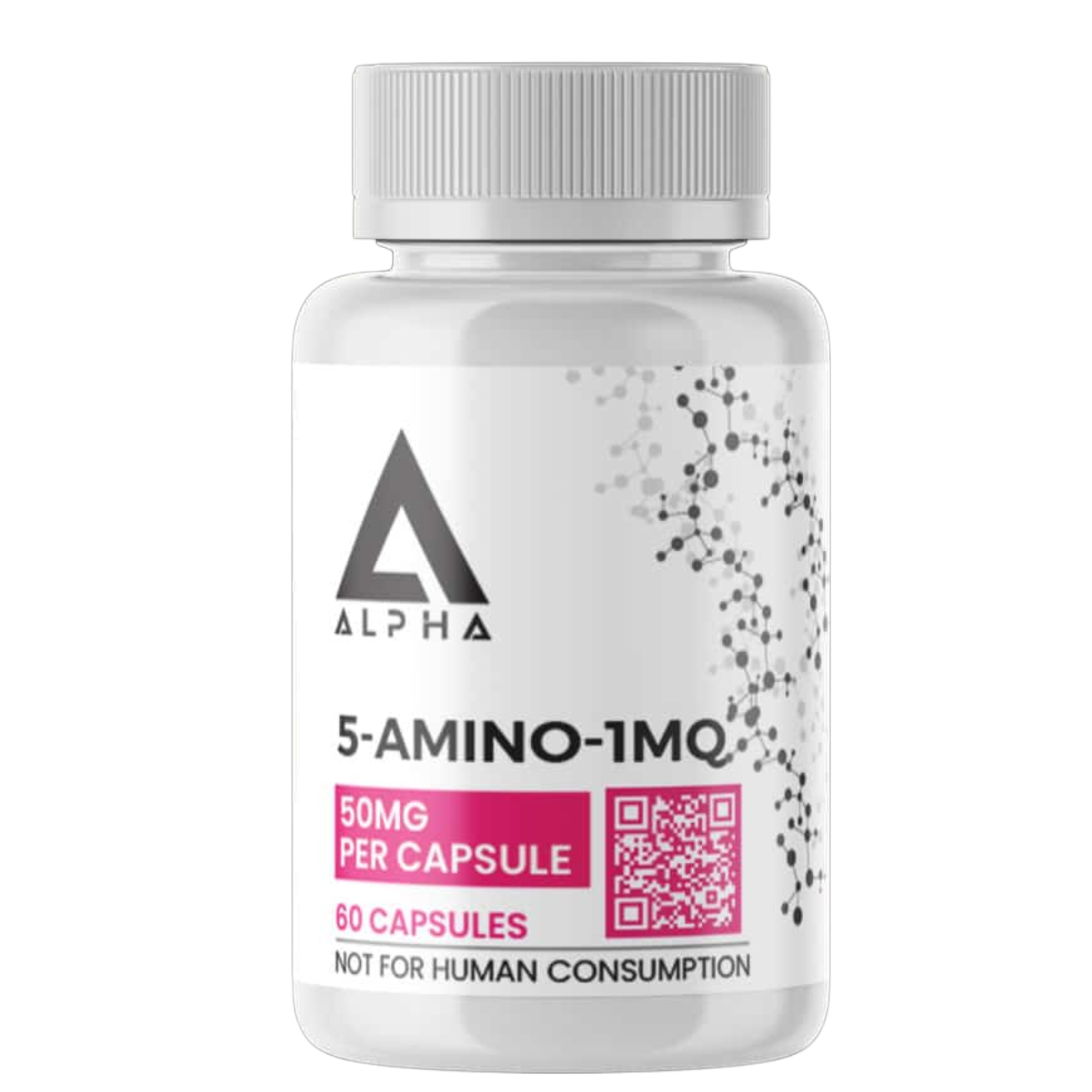
Because 5-Amino-1MQ is discussed in niche markets, product formats can vary. You’ll commonly see it packaged as either a research/compounding-style material (sometimes associated with peptide-like handling) or as a labeled “supplement” depending on the seller.
Product forms you may encounter:
- Vial-based concentrate (often associated with injection-style administration in user communities; requires sterile/handling guidance and careful measurement).
- Oral capsules or tablets (sometimes marketed for convenience; label accuracy can be variable).
- Powder for reconstitution (common in peptide-adjacent supply chains; requires attention to reconstitution method and stability).
Ingredients: The “main ingredient” should be clearly identified as 5-Amino-1MQ, but you may also see excipients or carrier materials depending on form (especially for oral products). Quality is not just the active compound; it’s also the inert materials and how consistently they’re dosed.
Quality standards to look for (practical checklist):
- COA (Certificate of Analysis) that matches the batch number you’re buying.
- Purity information with clear testing methods.
- Third-party testing or at least reputable lab references (not just “we test in-house” with no documents).
- Clear labeling showing the concentration per serving or per vial.
- Expiration and storage guidance that makes sense for the chemical form.
Quality red flags: vague “proprietary blend” claims, missing batch-specific documentation, no visible concentration info, inconsistent labeling between product images and descriptions, or pressure to buy quickly because “supplies are limited.”
Comparison of Common Options
| Format | Typical Dose/Use | Pros | Cons | Cost | Best For |
|---|---|---|---|---|---|
| Oral capsules/tablets | Often “X mg per serving” (varies widely) | Convenient; easier dosing | Accuracy can vary; unknown absorption | Low to mid | First-time cautious trials with tracking |
| Vial-based concentrate | Measured per vial; dosing depends on reconstitution/concentration | May be more consistent if verified | Handling complexity; higher barrier to correct use | Mid to high | Users who already manage precise dosing |
| Powder for reconstitution | Measured by mass; requires correct reconstitution | Flexibility for small adjustments | Error risk; stability concerns if mishandled | Mid | Careful experimenters with SOP discipline |
| “Stack” bundles (multi-ingredient) | Often combined with other actives | Convenience; marketing bundles | Hard to attribute effects; interaction risks | Varies | Only if you fully understand each ingredient |
| Unverified marketplace listing | Unclear concentration/handling | Sometimes cheapest | No batch COA; higher quality uncertainty | Lowest on paper | Best avoided |
Buying Framework and Red Flags
If you want a practical, consumer-friendly framework, use this like a checklist before paying for 5-Amino-1MQ. It’s designed to help you avoid the most common “spent money, got nothing (or got side effects)” scenarios.
- Step 1 — Verify batch documentation: Does the seller provide a COA that matches your batch/lot number?
- Step 2 — Confirm concentration clarity: Can you calculate your dose from the label without guessing?
- Step 3 — Check purity and contaminants: Are there results for impurities/solvents/metals (as applicable)?
- Step 4 — Look for consistent description: Do images, dosage specs, and COA details line up?
- Step 5 — Evaluate handling requirements: If it’s a vial/powder, are storage instructions realistic and detailed?
- Step 6 — Avoid “guaranteed results” language: Claims that imply certainty should be an immediate pause button.
- Step 7 — Don’t buy into stack pressure: If the offer pushes adding multiple actives at once, you lose the ability to isolate what caused effects.
Red-flag warnings (stop and reassess): missing COA, no batch number, “trust us” claims, unclear dosing, extreme urgency marketing, unusually low prices compared to similar products with documented testing, and any seller who refuses to explain basic labeling or documentation.

Common Mistakes and How to Avoid Them
In the supplement world (especially with niche compounds), the mistakes are predictable. Here are the ones that most often lead to wasted money, confusing results, or unwanted side effects—plus how to reduce the odds.
- Mistake: Starting multiple variables at once (new workout program + new caffeine strategy + new compound).
Avoid: Change one variable at a time for at least 10–14 days. - Mistake: Dose escalation because you “don’t feel it fast enough.”
Avoid: Use a conservative approach and don’t jump doses within the first few days. - Mistake: Ignoring side effects as “temporary.”
Avoid: If symptoms persist or worsen (headache, nausea, insomnia, unusual agitation), stop and reassess your plan. - Mistake: Relying on seller claims instead of documentation.
Avoid: Treat COA and labeling as required, not optional. - Mistake: Using the compound while sleep is chaotic.
Avoid: Consistent sleep is the easiest “control variable” you can use to interpret effects. - Mistake: Not tracking anything beyond feelings.
Avoid: Use a simple log: sleep hours, caffeine, training notes, and one daily rating of energy/comfort.
FAQ
Is 5-Amino-1MQ proven to work for performance or body composition?
No clear, definitive proof guarantees consistent outcomes in humans. Conversations often reflect early research ideas and user reports, which can differ widely. Treat it as an unconfirmed experiment rather than a proven supplement.
How long does it take to notice effects from 5-Amino-1MQ?
People’s timelines vary, and there’s no universal “day X” pattern. If you’re tracking a cautious trial, a 10–14 day observation window is a reasonable place to look for noticeable changes—while keeping sleep, training, and caffeine as stable as possible.
What are the possible side effects of 5-Amino-1MQ in young adult men?
Reported issues in anecdotal discussions can include headaches, stomach discomfort, restlessness, or sleep disruption—especially if dosing is too high, products are inaccurately labeled, or other stimulants/stressors are in play. If side effects are persistent, stop and reassess.
Can you combine 5-Amino-1MQ with other supplements or stimulants?
Combining increases uncertainty because you can’t easily attribute effects and you may increase the chance of unwanted interactions (especially with stimulants or multiple actives). If you combine at all, start with one additional variable at a time and monitor closely.
Is 5-Amino-1MQ better oral versus injection/alternative routes?
There isn’t a one-size-fits-all “better” route. Oral forms may be easier to use but rely on absorption and label accuracy; injection-style use may require higher handling discipline and sterile considerations. The safest choice tends to be the route with the clearest labeling, verified product quality, and the lowest practical risk for you.
A Practical 2-Week Experiment Framework
If you want an actionable approach without hype, use this framework for evaluating 5-Amino-1MQ. It focuses on controlling variables, monitoring tolerance, and deciding based on your own logged data.
- Days 1–2 (setup): Lock your baseline: keep caffeine, sleep schedule, and training volume the same. Record: sleep hours, morning energy (1–10), and any pre-existing sensitivities.
- Days 3–6 (introduction): Use your chosen dose exactly as labeled or as consistently specified by the product instructions you trust. Track daily: energy/mood rating, workout completion, and any side effects (headache, nausea, unusual agitation, sleep changes).
- Days 7–10 (evaluation): Keep training consistent. If you’re seeing benefits, they should be trending rather than “random.” If side effects appear, reduce risk by stopping rather than escalating.
- Days 11–14 (decision window): Decide whether you continue, stop, or switch approach. If you didn’t notice anything meaningful and you had no issues, you can conclude “not for me” without assuming it’s useless long-term. If you had adverse effects, stop and do not “push through.”
Simple success criteria (consumer-style): One or two measurable improvements (e.g., better gym consistency or less post-workout fatigue) and no meaningful negative effects. If you only feel it mentally because you’re monitoring constantly, that’s not a strong signal.
Stop immediately signals: worsening headaches, persistent GI distress, significant sleep disruption, or any symptom that feels unusual compared to your normal baseline.
About the Author
I’m Jamie Carter, a fitness consumer reviewer who focuses on ingredient transparency, dosing clarity, and real-world user outcomes. My work blends supplement label literacy with practical training logging—tracking what changes, what doesn’t, and what the quality documentation actually supports. This article is written from a consumer-review perspective: I don’t claim medical outcomes, and I don’t guarantee results. 5-Amino-1MQ is a niche compound, and individual responses vary. Nothing here is medical advice, and you should treat any use as an experimental decision based on product quality, careful monitoring, and your own risk tolerance.
Discussion